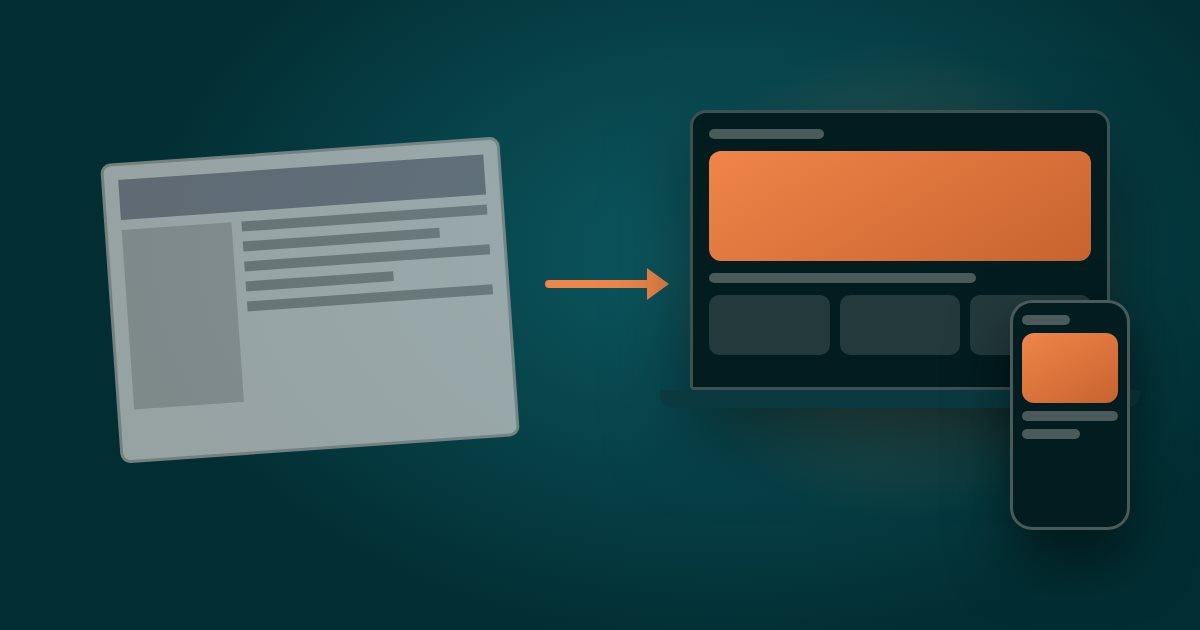

You need a redesign if your website’s foundation is solid but it looks dated, reads poorly on phones or doesn’t bring in enquiries. You need a new website if the platform itself is the problem: it’s slow no matter what you do, you can’t edit it, it’s insecure, or your business has changed so much that the old structure no longer fits. In short, redesign when the problem is the surface, and rebuild when the problem is underneath.
Here’s how to tell which one you’re dealing with, and what to ask before you spend money on either.
What’s the difference?
A redesign keeps your existing site and platform but changes how it looks and works: new layout, colors, fonts, photos and copy, better mobile design and clearer calls to action. Your pages, web address and most of your content stay in place.
A new website starts from scratch, often on a different platform or theme, with a new page structure, new content and new features. Some of your old content may move across, but the site itself is replaced.
Both can make your business look better online. The right choice depends on what’s actually wrong.
Signs a redesign is enough
A redesign is usually the faster, lower-risk option when:
- It looks dated. The design feels five years old, but the site works and you can edit it.
- It’s hard to use on phones. Text is tiny, buttons are cramped or pages need zooming, but the platform supports a mobile-friendly theme.
- Visitors don’t take action. People visit but don’t call, book or fill in the form, which often means weak calls to action, unclear wording or missing trust signals like reviews.
- Your branding changed. You have a new logo, colors or photos, and the site needs to match.
- Your content is solid. Your pages rank in Google and answer customer questions, so you don’t want to lose them.
Signs you need a new website
Starting over is usually the better investment when:
- You can’t update it. Every small change needs a developer, or you don’t have the login at all.
- The platform is outdated or unsupported. The theme, plugins or website builder are no longer maintained, which brings security risks.
- It’s slow no matter what you try. You’ve compressed images and turned on caching, but the site is still slow because of how it was built.
- It’s missing features you now need. Online booking, ordering, a blog or a gallery, and your current setup can’t add them cleanly.
- Your business has changed. New services, new locations or a new audience mean the old page structure no longer makes sense.
- It’s been patched too many times. Years of quick fixes have left broken pages, duplicate content and buttons that go nowhere.
A quick test: answer these five questions
Give yourself one point for each yes:
- Can you (or your team) easily edit text and photos today?
- Is the platform, theme and plugins still updated and supported?
- Does the site load reasonably fast on a phone once images are optimized?
- Does the current page structure still match the services you sell?
- Are you happy to keep your current web address and most of your content?
4 or 5 points: a redesign will most likely fix your problems.
2 or 3 points: talk it through with a web designer, because either option could make sense.
0 or 1 point: a new website will probably save you money and frustration in the long run.
Don’t lose what’s already working
Whichever you choose, protect what your current site has earned:
- Keep your web address. Changing your domain resets a lot of your search visibility.
- Keep or redirect your page addresses. If a page’s address changes, set up a 301 redirect from the old address so visitors and Google land in the right place.
- Move your best content. Pages that bring in visitors today should carry over, updated rather than deleted.
- Back up the old site before anything changes.
- Recheck your Google Business Profile and other listings so they point to the right pages.
Questions to ask before you hire someone
Before you sign up for a redesign or a new build, get clear answers on cost, timeline, who owns the site and what happens after launch. Our guide to the 12 questions to ask before hiring a web design company walks through each one. And to make sure the new version includes everything it should, use our small business website checklist.
Not sure which one you need?
Our web design and development team can look at your current site and tell you honestly whether a refresh will do the job or whether starting fresh makes more sense.
If you decide on a new site, our plans include design, launch and free hosting to start, all for one clear project price. The Growth Website Plan gives you five pages (Home, About, Services, Gallery and Contact), full SEO setup and Google Business Profile setup for a one-time $599, with your first 2 months of hosting free.
Next step: send us your current website address and we’ll tell you which option fits.